Reconfigurable internal quantum Hall boundaries in graphene visualized by multimodal nanoimaging
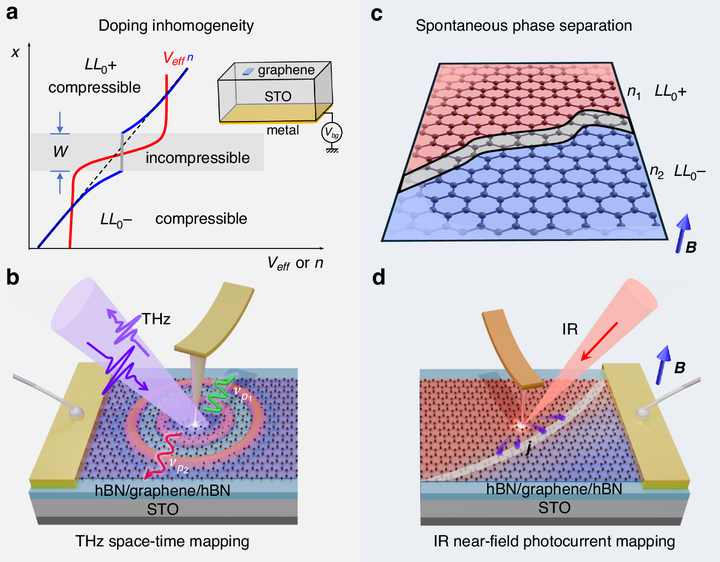 Figure 1 from Dai et al., Light: Science & Applications 15, 401 (2026), licensed under CC BY 4.0.
Abstract
Controlling internal boundaries in quantum Hall systems offers a route to engineering reconfigurable topological states. Here, we demonstrate the creation and tunability of incompressible quantum Hall strips separating domains with different sub-Landau level occupations in graphene on high-dielectric SrTiO₃ substrate. This strip constitutes a topological boundary, similar to a quantum Hall edge state, which we manipulate in real space by adjusting the magnetic field and the carrier density. We map the carrier density gradients of graphene using space and time resolved (space-time) terahertz nanoscopy. We also track the location of the incompressible strip with infrared nearfield photocurrent imaging. The high dielectric screening of SrTiO₃ enhances the width of the incompressible region to the micrometer scale, allowing us to directly probe the interplay of charge inhomogeneity, electrostatic screening, and quantum Hall physics across the entire device. These results establish a platform for exploring internal quantum Hall boundaries and suggest their potential utility as dynamically reconfigurable channels for topological charge transport.